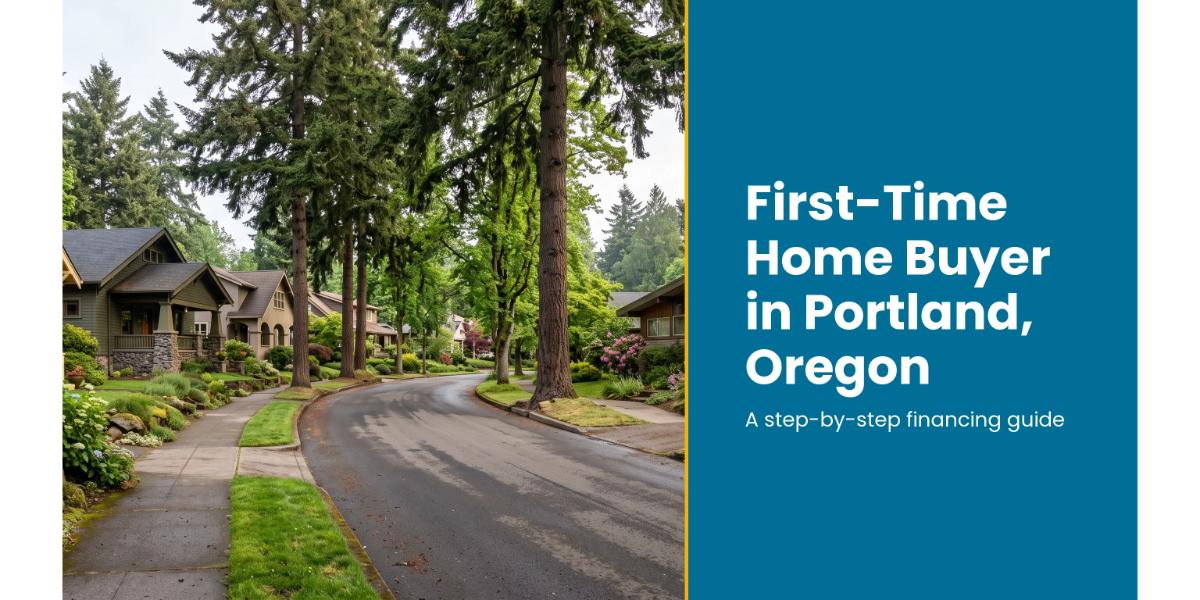
When preparing for your first Portland home purchase, organizing your financial paperwork matters just as…
Down Payments: Conventional, FHA, and VA Guide

Saving for a down payment can feel like the biggest hurdle between you and a home purchase.
Qualified borrowers may be able to buy with as little as 3% down on a conventional loan, 3.5% down on an FHA loan, or 0% down on a VA loan.
In this guide, I’ll explain how each option works, what affects your actual cash requirement, and how to compare the choices before you make an offer.
Key Takeaways
- Conventional: Some qualified borrowers can put down as little as 3%, though program rules vary.
- FHA: The minimum down payment is generally 3.5% with qualifying credit.
- VA: Eligible borrowers may finance the full purchase price with no required down payment.
- Cash Needed: Your down payment is separate from closing costs, prepaid taxes, insurance, and reserves.
- Best Fit: The right loan depends on eligibility, credit, cash available, property type, and long-term cost.
At Matt Jolivette (NMLS# 90661), I help borrowers compare these choices using the full payment and total cash needed, not just the advertised minimum. That matters because the loan with the smallest down payment isn’t always the least expensive option over time.
Quick Answers About Mortgage Down Payments
- Do I have to put 20% down? No. Conventional, FHA, and VA programs can all allow less than 20% down for qualified borrowers.
- Is the down payment my total cash to close? No. Cash to close may also include lender and third-party costs, prepaid expenses, discount points, and initial escrow funding.
- Can gift funds cover my down payment? Often, yes. Conventional and FHA loans commonly allow eligible gift funds, and the source must be documented.
- Does a bigger down payment lower my monthly payment? Generally, yes. Borrowing less reduces principal and interest, and it may also reduce or eliminate mortgage insurance.
How Much Do You Need Down on a Conventional Loan?
A conventional loan may allow a down payment as low as 3% for qualified borrowers. Other conventional programs commonly start at 5% down, depending on occupancy, property type, income limits, loan size, and whether you’ve owned a home recently.
Here’s the straight talk. A 3% minimum doesn’t mean 3% is automatically the right move. Putting more down can reduce your loan balance, lower the monthly payment, and affect the cost of private mortgage insurance.
When Does Conventional PMI Apply?
Private mortgage insurance, or PMI, is commonly required when a conventional borrower puts down less than 20%. The cost varies based on credit, down payment, loan amount, occupancy, and other risk factors.
PMI isn’t always a reason to wait. If keeping more money available for repairs, reserves, or other expenses matters to you, a smaller down payment with PMI may make sense. If you have more cash available, increasing the down payment may produce a better monthly number.
Conventional PMI can often be removed after the loan meets certain equity and payment-history requirements. Automatic termination rules may also apply. The timing depends on the loan terms, payment history, property value, and current servicing guidelines.
Who May Benefit From a Conventional Loan?
A conventional loan may be worth considering if you have solid credit, stable qualifying income, and enough cash for the down payment and closing costs. It may also work well when you want the possibility of removing monthly mortgage insurance later.
Conforming loan limits vary by county. A purchase in Multnomah County, Clackamas County, Washington County, or Clark County may have different considerations than a higher-priced property requiring a jumbo home loan.
How Much Do You Need Down on an FHA Loan?
An FHA loan generally requires at least 3.5% down when the borrower meets the applicable credit guidelines. FHA loans are insured by the Federal Housing Administration but are issued through approved mortgage lenders.
FHA financing can be useful when a borrower needs more flexible credit or debt-to-income guidelines than a conventional program may allow. Approval still depends on documented income, credit history, assets, property eligibility, and the lender’s underwriting review.
How FHA Mortgage Insurance Works
FHA loans generally include an upfront mortgage insurance premium and an annual mortgage insurance premium paid through the monthly payment. The exact cost depends on the loan amount, term, down payment, and current FHA rules.
Unlike conventional PMI, FHA mortgage insurance may remain for the full loan term when the down payment is below a certain level. A future refinance into a conventional loan may be an option if the borrower later has enough equity and meets the current qualification rules, but that isn’t guaranteed.
If you’re comparing an FHA home loan with a low-down-payment conventional loan, look at more than the starting payment. Compare mortgage insurance, interest rate, cash needed, and how long you expect to keep the loan.
Can Sellers Help With FHA Closing Costs?
FHA guidelines allow sellers to contribute toward eligible closing costs, subject to program limits and contract terms. Seller credits generally can’t be used to satisfy the minimum required down payment, but they may reduce other cash due at closing.
The purchase agreement and appraisal also matter. A seller credit should be structured around actual eligible costs, because unused credit typically doesn’t come back to the buyer as cash.
How Much Do You Need Down on a VA Loan?
An eligible VA borrower may be able to purchase a home with 0% down. The VA loan benefit is available to qualifying service members, veterans, and certain surviving spouses who meet the Department of Veterans Affairs eligibility rules.
A zero-down option doesn’t mean there are no costs. Buyers may still have closing costs, prepaid taxes, homeowners insurance, and other expenses. Seller credits, lender credits, or negotiated contract terms may help with eligible costs, depending on the transaction.
VA Entitlement and Loan Amount
The Certificate of Eligibility shows whether a borrower has VA eligibility and how much entitlement is available. Borrowers with full entitlement may not have a VA-mandated loan limit, though lender qualification standards still apply.
If part of the entitlement is already tied to another VA loan, a down payment may be needed. The amount depends on the remaining entitlement, purchase price, county loan limits used for the calculation, and current VA rules.
What Is the VA Funding Fee?
Most VA loans include a one-time funding fee. The amount varies based on the type of loan, down payment, prior use of the benefit, and whether an exemption applies.
The funding fee can commonly be financed into the loan. Some eligible borrowers are exempt, so the Certificate of Eligibility and supporting VA documentation should be reviewed early.
Oregon veterans may also want to compare VA financing with an ODVA loan. They’re different programs with different structures, so I’d review the payment, costs, eligibility, and long-term plan side by side.
Conventional vs. FHA vs. VA Down Payments
| Loan Type | Potential Minimum Down | Mortgage Insurance | Main Consideration |
|---|---|---|---|
| Conventional | As low as 3% for qualified borrowers | PMI commonly applies below 20% down | Credit and down payment can affect PMI and pricing |
| FHA | Generally 3.5% with qualifying credit | Upfront and annual mortgage insurance generally apply | More flexible guidelines may help in some scenarios |
| VA | Potentially 0% for eligible borrowers | No monthly mortgage insurance; a funding fee may apply | Eligibility and available entitlement must be verified |
These are general program structures as of 2026. Rates, fees, underwriting requirements, and loan guidelines change, so current information should be verified for your purchase.
Down Payment Is Not the Same as Cash to Close
This is where buyers can get caught off guard. Your down payment is only one part of the money you may need at closing.
Cash to close may include:
- Your required down payment
- Lender and third-party closing costs
- Prepaid property taxes and homeowners insurance
- Initial escrow account funding
- Discount points, if you choose to pay them
- Required financial reserves, when applicable
- Earnest money credits already deposited
- Seller or lender credits applied to eligible costs
Some of these numbers depend on the property and closing date. Property taxes in Portland won’t necessarily match taxes in Lake Oswego, Tigard, Beaverton, Vancouver, or Boise. Insurance, title charges, and prepaid expenses also vary.
Should You Make a Larger Down Payment?
A larger down payment can reduce the loan amount and monthly payment. It may also improve conventional loan pricing or reduce mortgage insurance. But putting every available dollar into the house can leave you short on reserves after closing.
Here’s my honest take. I’d rather see the full picture than tell every borrower to put down as much as possible. We need to compare the monthly payment, mortgage insurance, closing costs, emergency funds, and how long you plan to keep the home.
A borrower putting 5% down and keeping a solid reserve may be in a better position than someone putting 20% down and having almost nothing left. The right answer depends on your complete financial picture.
How to Choose the Right Down Payment
- Confirm program eligibility. Check conventional, FHA, VA, and any state-specific options that apply.
- Document available funds. Separate your down payment money from funds needed for closing costs and reserves.
- Compare complete monthly payments. Include principal, interest, taxes, homeowners insurance, mortgage insurance, and association dues when applicable.
- Review the source of funds. Savings, gift funds, grants, asset sales, and other sources may have different documentation rules.
- Plan for the home after closing. Keep repairs, moving costs, and financial reserves in the discussion.
The goal is to put real math in front of you before you write an offer. A good pre-approval should show more than a maximum purchase price. It should help you understand what the payment and cash requirement look like at several price points.
Review Your Down Payment Options Before You Shop
If you’re buying in Portland, the Portland-Vancouver-Hillsboro metro area, or elsewhere in Oregon, Washington, or Idaho, I can compare conventional, FHA, VA, and other available programs for your scenario.
Call, text, or email me and I’ll review your income, credit, available funds, and purchase plan. We can compare the options, talk through pre-approval planning, and make sure you understand the next steps before you make an offer.
Frequently Asked Questions
Can I use retirement funds for a down payment?
Retirement funds may be an acceptable source if the program allows access to the account and the withdrawal or loan is properly documented. Taxes, penalties, repayment obligations, and the effect on your reserves should be reviewed before moving the money.
Does earnest money count toward my down payment?
Earnest money is generally credited toward the total cash you owe at closing, including the down payment and eligible costs. The deposit and its source must be documented, and the final credit appears on the closing disclosure.
Can I borrow my down payment with a personal loan?
An unsecured personal loan is generally not an acceptable source for a required down payment. Some secured loans may be allowed, but the payment usually must be included in your debt-to-income calculation and the source must meet program rules.
Does buying a duplex change the minimum down payment?
It can. Down payment rules for two- to four-unit properties vary by loan program, occupancy, and current underwriting guidelines. Expected rental income may sometimes help with qualification, but the property and borrower must meet the applicable rules.
What happens if the appraisal comes in below the purchase price?
A low appraisal can affect the loan amount because financing is generally based on the lower of the purchase price or appraised value. The buyer and seller may renegotiate, the buyer may cover part of the difference, or the contract may provide other options depending on its terms.

About the Author
Matt Jolivette
Mortgage Broker at Matt Jolivette - Associated Mortgage Brokers · NMLS #90661
Matt Jolivette, NMLS #90661, is a mortgage broker and co-owner of Associated Mortgage Brokers, company NMLS #86136. He began at the company as a loan processor in 2000, became a loan originator in 2001 and became a co-owner in 2011. He earned a Bachelor of Science degree in Finance from Portland State University in 2005.
Specializes in: Conventional, FHA, VA
Licensed in: ID, OR, WA
Related Posts